ADG Water Solutions · Ladera Ranch
We Are the Source for Clear Answers About Your Home’s Water
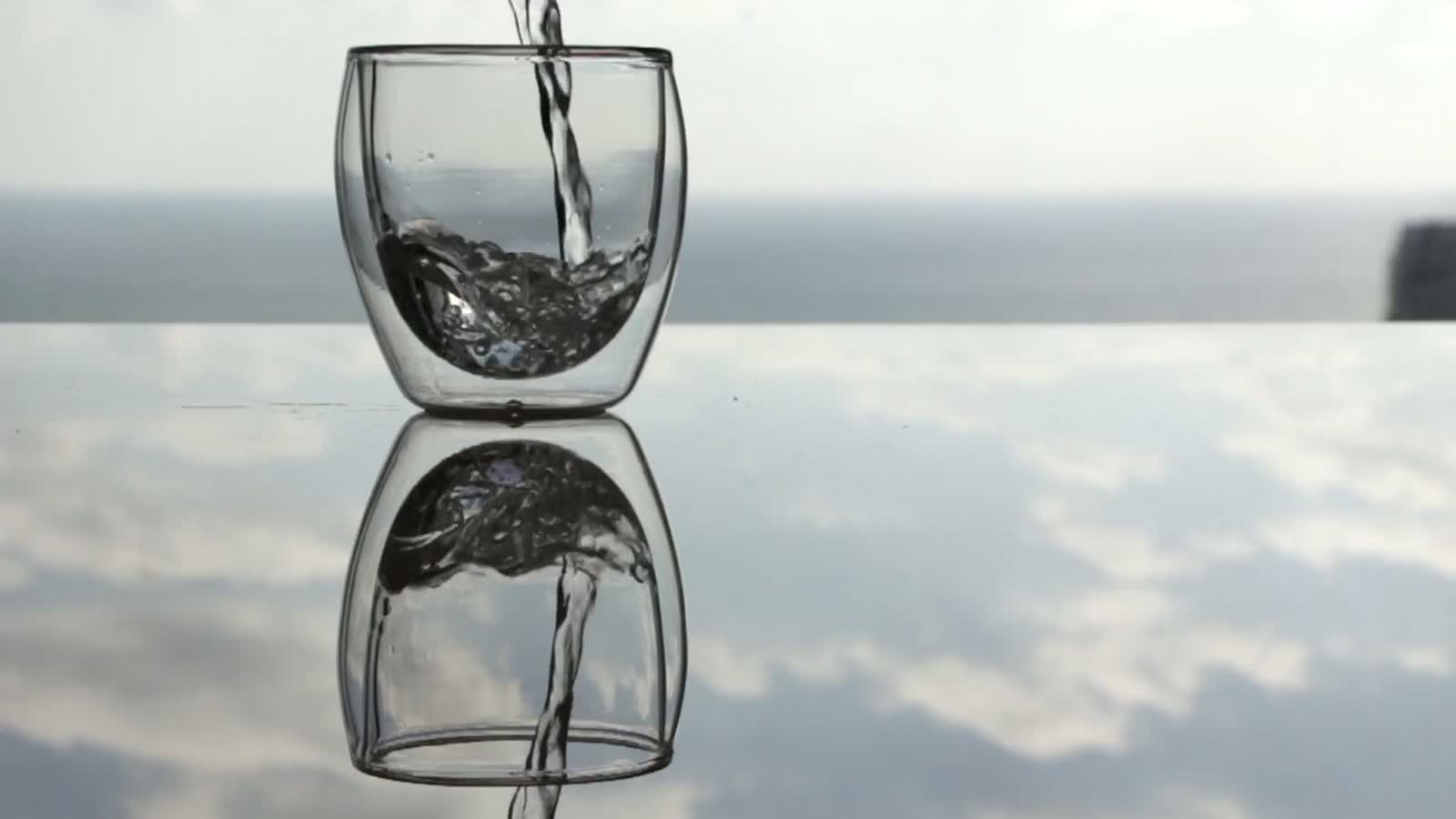
ADG Water Solutions helps South Orange County homeowners understand their household water, select appropriate treatment equipment, receive professional installation and maintain their systems for long-term performance.
An in-home screening is not a certified laboratory analysis. We tell you when a laboratory test is the right next step — and when nothing needs to change.
- Hardness
- ≈ 15 gpg average
- Total Dissolved Solids
- ≈ 614 ppm average
- Disinfection
- Chloramines
SMWD reported
SMWD reported
SMWD reported
Offerings & pricing
See what it costs, then pick your appointment
Every service we offer is listed with a price or a price range. Choose the one you want and it carries straight into the scheduling form — no phone call required to find out a number.
In-Home Water Assessment
$0
Complimentary, no obligation
Typical visit: 45 – 60 minutes
An advisor reviews your published utility data, walks the plumbing and runs a basic in-home screening so the conversation starts from measurements instead of assumptions.
What is included
- Basic in-home screening (hardness, TDS, chlorine character)
- Review of your water utility's most recent published report
- Plumbing, loop and drain access review
- Written summary of findings and options with price ranges
Accredited Laboratory Testing
$185 – $525
Per panel, depending on the analytes requested
Typical visit: Sample collection ~30 minutes; results in 7 – 14 days
When a concern cannot be answered by an in-home screening, we collect samples to protocol and submit them to an accredited laboratory. An in-home screening is not a certified laboratory analysis.
What is included
- Sample collection following laboratory protocol
- Accredited laboratory analysis (panel selected with you)
- Plain-language review of the report
- Treatment objectives written only from what the results show
Whole-Home Carbon Filtration Install
$1,850 – $3,400
Equipment plus professional installation
Typical visit: Typically a half day
Whole-home filtration installed at the main line, most often selected for taste, odor and chlorine character. PFAS reduction only where the specific model carries that certified claim.
What is included
- Certified equipment sized to your flow requirement
- Licensed-partner installation (C-55/C-36 scope)
- Startup, flush and pressure verification
- Documented media replacement schedule
Water Softener Install
$1,650 – $3,200
Equipment plus professional installation
Typical visit: Typically a half day
Cation-exchange softening for scale, spotting and appliance wear — the most common measured condition in South Orange County.
What is included
- Grain capacity matched to hardness and household size
- Licensed-partner installation with bypass
- Drain and brine setup, programming and startup
- Salt and monitoring walkthrough
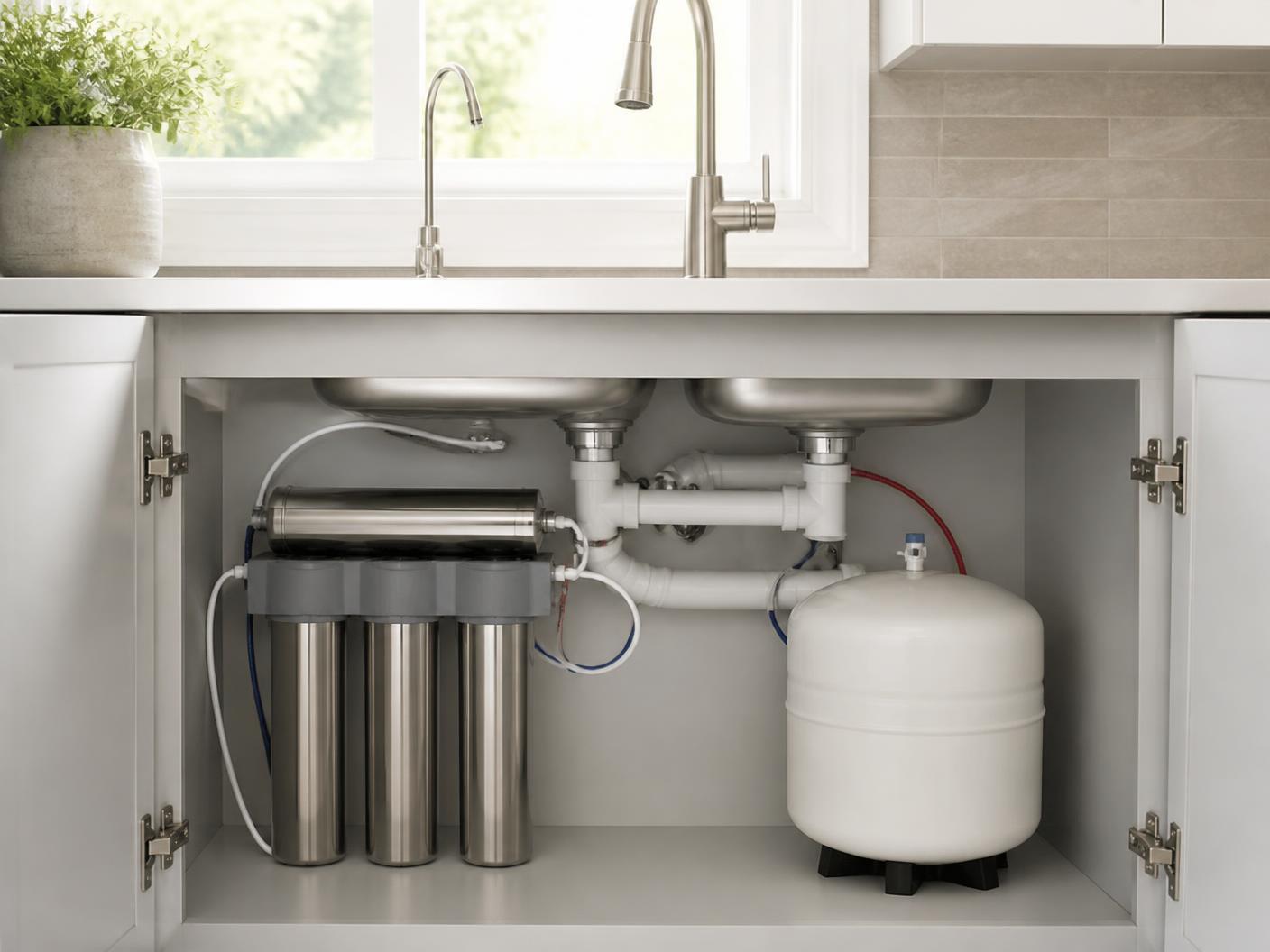
Reverse Osmosis Drinking Water Install
$650 – $1,900
Equipment plus professional installation
Typical visit: 2 – 4 hours
Point-of-use treatment at one fixture for drinking and cooking water, with optional refrigerator or pot-filler line.
What is included
- Certified RO system (stage count selected with you)
- Faucet installation and drain saddle or air gap
- Optional refrigerator line (quoted in range)
- Filter and membrane replacement schedule
Combination Whole-Home + Drinking Water
$3,900 – $7,500
Coordinated multi-component design, installed
Typical visit: One full day
A coordinated design pairing whole-home treatment with dedicated drinking-water treatment, on one maintenance schedule.
What is included
- Whole-home filtration and softening
- Dedicated drinking-water system
- Single coordinated maintenance calendar
- Written scope, certifications and pricing before any work
Service & Repair Visit
$129 diagnostic
Applied to the repair; repairs typically $180 – $850
Typical visit: 1 – 2 hours
Existing equipment not performing, leaking or past due for service. ADG service and repair work is performed under B&P §7048 scope; new installs are handled by our licensed partners.
What is included
- Diagnostic on the installed system
- Pressure, leak and bypass review
- Written repair options with pricing before work begins
- Diagnostic fee credited to the approved repair
Filter, Media & Membrane Change
$145 – $625
Depends on cartridge, media volume or membrane
Typical visit: 45 – 90 minutes
Scheduled replacement of cartridges, carbon media or RO membranes so a system keeps performing to the specification it was sold against.
What is included
- Correct replacement parts for your exact model
- Sanitization where applicable
- Performance verification after the change
- Next-service date documented
ADG Water Care Plan Enrollment
$189 – $1,200 per year
Essential, Complete or Concierge tier
Typical visit: Annual agreement, scheduled visits
Ongoing documented care across whole-home and drinking-water equipment, with priority scheduling and preferred replacement pricing on the upper tiers.
What is included
- Essential — $189 – $249/yr: annual inspection and report
- Complete — $389 – $649/yr: scheduled filter service and RO check
- Concierge — $749 – $1,200/yr: coordinated whole-home care and priority service
- Maintenance reminders and documented service history
Community context
Why Ladera Ranch families are asking questions right now
Recent reports of rare pediatric cancers and community questions about potential environmental exposures have increased the demand for transparency and careful investigation. No public-health investigation has established that Ladera Ranch drinking water caused these illnesses. ADG Water Solutions does not make that claim.
Reported Cases
Families have reported six Ewing sarcoma diagnoses, prompting calls for an expedited review.
Officials have stated that the cause of the reported cancers is not known.
Source: Orange County Fifth District · View source (opens in a new tab)
Environmental Questions
Residents have raised questions regarding potential environmental exposures, including landscape-product use.
LARMAC implemented a temporary 60-day pause on certain routine landscape products while reviewing its program. This pause does not establish that the products caused the illnesses, and it does not establish that drinking water was contaminated.
Source: LARMAC (Ladera Ranch Maintenance Corporation) · View source (opens in a new tab)
Review Underway
Relevant public-health and cancer-registry resources are revisiting the available information.
An updated assessment involving relevant public-health and cancer-registry resources is underway. No conclusion has been published.
Source: Orange County Health Care Agency · View source (opens in a new tab)
What you can control
You cannot control a regional investigation. You can control the water inside your home.
Four steps, in order. Each one is a decision you own.
- 01
Understand
Review what the current utility report says about the water delivered to your neighborhood, and what it does not address.
- 02
Test
Use a basic in-home screening for characteristics it can measure, and accredited laboratory testing for anything it cannot.
- 03
Treat
Select equipment certified for the specific objective you identified — not equipment chosen before the question was asked.
- 04
Maintain
Keep documented replacement intervals so the system continues performing the way it was specified.
Local water facts
What the current Santa Margarita Water District report actually says
Figures below come from the 2026 Water Quality Report (covering 2025 testing). They describe the water delivered to the district's service area, not the plumbing inside any individual home.
Standards
Met or surpassed
SMWD reports that water delivered during 2025 met or surpassed applicable federal and state requirements.
Meeting applicable standards is a regulatory finding about the delivered supply. It is not a statement about any individual home's plumbing, fixtures or preferences.
Source: Santa Margarita Water District · View source (opens in a new tab)
Water Source
Imported surface water
Ladera Ranch primarily receives imported, treated surface water.
Source water influences mineral content, taste and the disinfection approach used in the distribution system.
Source: Santa Margarita Water District · View source (opens in a new tab)
Hardness
≈ 15 gpg average
Approximately 15 grains per gallon average, with a reported range of approximately 12.3 to 17.5 grains per gallon.
Hard water can contribute to scale, spotting and reduced efficiency of water-using equipment.
Source: Santa Margarita Water District · View source (opens in a new tab)
Total Dissolved Solids
≈ 614 ppm average
Approximately 614 ppm average, with a reported range of approximately 510 to 680 ppm.
TDS is a broad measure of dissolved material and is not, by itself, a health-risk determination.
Source: Santa Margarita Water District · View source (opens in a new tab)
Disinfection
Chloramines
Chloramines are used to help control microorganisms in the distribution system.
Treatment selection for taste, odor or chloramine reduction must match a product's verified performance claims.
Source: Santa Margarita Water District · View source (opens in a new tab)
Two different jobs
Municipal treatment and home treatment are not competing claims
One protects an entire distribution system. The other addresses what happens at your fixtures, on your glassware and in your appliances.
Public water treatment addresses
- Regulatory compliance
- Disinfection
- Distribution-system safety
- Source-water treatment
- Community-wide reliability
Home treatment may address
- Taste and odor preferences
- Chlorine or chloramine reduction when certified
- Hardness and scale
- Drinking-water treatment at a specific faucet
- Specific tested contaminants within a system's certified claims
- Plumbing and appliance protection
- Household convenience
Start where you are
What made you look into your water?
Select anything that applies. We will show what it usually indicates and the responsible next step — not a product.
Nothing selected yet. Choosing a concern does not commit you to anything.
Selecting a concern does not mean a particular system is required. It identifies the next responsible step.
Honest limits
What an in-home screening can measure — and what it cannot
An in-home screening is not a certified laboratory analysis.
In-home screening can review
- Hardness
- Total dissolved solids or conductivity
- pH
- Chlorine or chloramine indicators where appropriate
- Visible scale and fixture conditions
- Current treatment equipment
- Household water objectives
Requires an accredited laboratory
- PFAS
- Specific pesticides or herbicides
- Volatile organic compounds
- Metals
- Microbiological concerns
- Other specifically identified substances
Treatment options
Five categories, each with a defined job
Equipment is matched to an identified objective. Every category below shows an installed price range and what it does not do.
Whole-Home Carbon Filtration
$1,850 – $3,400 installed
Range reflects media type, tank size, flow requirement and plumbing access at the main line.
Treats water as it enters the home, most often selected for aesthetic objectives such as taste and odor.
Treatment objectives
- Taste and odor improvement
- Chlorine reduction
- Chloramine reduction only when supported by the exact product's certification and capacity
- Reduction of specifically listed compounds
- Maintenance
- Media replacement or scheduled media service
- Best suited to
- Homes seeking whole-house aesthetic improvement in taste, odor and chlorine character.
What it does not do: Not every carbon system reduces PFAS. Any PFAS statement must match the specific model's certified reduction claim.
Water Softening
$1,650 – $3,200 installed
Range reflects grain capacity, valve type, drain and loop availability, and whether a bypass is added.
A cation-exchange system that addresses hardness minerals, the primary driver of scale and spotting in South Orange County.
Treatment objectives
- Hardness reduction
- Scale control
- Reduced mineral spotting
- Protection of water-using appliances
- Improved soap and detergent performance
- Maintenance
- Salt monitoring, periodic inspection and resin review
- Best suited to
- Homes with visible scale, spotting or appliance and fixture wear from hard water.
What it does not do: A softener addresses hardness. It is not a substitute for filtration intended to address taste, odor or specific contaminants.
Reverse Osmosis
$650 – $1,900 installed
Range reflects stage count, tank or tankless design, faucet selection and whether a fridge or pot-filler line is added.
A point-of-use system that treats water at a specific fixture for drinking and cooking.
Treatment objectives
- Drinking and cooking water
- Reduction of dissolved substances within verified claims
- PFAS reduction only with a product carrying the applicable certification and performance claim
- Maintenance
- Prefilter, postfilter and membrane replacement on schedule
- Best suited to
- Households focused on drinking and cooking water quality or reducing bottled-water use.
What it does not do: PFAS or other health-effect claims apply only to the specific certified model and only within its stated capacity.
Combination System
$3,900 – $7,500 installed
Range reflects the component set, the loop configuration and any repiping required at the main.
A coordinated design pairing whole-home treatment with dedicated drinking-water treatment.
Treatment objectives
- Whole-home filtration
- Hardness treatment
- Dedicated drinking-water treatment
- Coordinated maintenance
- Maintenance
- Coordinated schedule across each component
- Best suited to
- Homes addressing hardness, aesthetic objectives and drinking water in a single plan.
What it does not do: A combination design is only appropriate when each objective is identified. Component claims remain product specific.
Specialized Treatment
$1,200 – $6,500 installed
Range depends entirely on the substance identified by testing and the certified technology required to address it.
Equipment selected for a specific condition that has been identified through appropriate testing.
Treatment objectives
- Sediment
- Iron
- Manganese
- Nitrate
- Specific VOCs
- Specific PFAS
- Specific pesticides or herbicides
- Other identified substances
- Maintenance
- Determined by the technology and the measured condition
- Best suited to
- Homes with a documented test result for a specific substance or condition.
What it does not do: Treatment is selected only after the concern and treatment objective are identified.
Side by side
Comparing what each category can be responsible for
“Depends on product” is a real answer. It means the claim must be verified on the specific certified model.
| Question | Whole-home carbon | Softener | Reverse osmosis | Combination | Specialized |
|---|---|---|---|---|---|
| Treats all water entering home | Yes | Yes | No | Yes | Depends on product |
| Treats drinking water at one fixture | No | No | Yes | Yes | Depends on product |
| Addresses hardness | No | Yes | Depends on product | Yes | Depends on product |
| Addresses taste and odor | Yes | No | Yes | Yes | Depends on product |
| May address PFAS when specifically certified | Depends on product | No | Depends on product | Depends on product | Depends on product |
| Requires drain connection | Depends on product | Yes | Yes | Yes | Depends on product |
| Requires salt | No | Yes | No | Depends on product | Depends on product |
Certification literacy
A standard number is not a performance claim
Knowing how to read a certification is the difference between buying equipment and buying an outcome.
NSF/ANSI 42
Generally addresses aesthetic effects such as chlorine, taste and odor.
NSF/ANSI 44
Applies to residential cation-exchange water softeners.
NSF/ANSI 53
Addresses specified contaminants with health effects.
NSF/ANSI 58
Applies to reverse-osmosis systems.
The ADG process
Six steps, in this order, every time
Nothing is recommended before the water condition and your objective are on paper.
Listen
We begin with your concerns, existing equipment, water use and household goals.
Review and Screen
We review available utility information and conduct appropriate basic screening.
Test When Needed
For concerns that cannot be evaluated by an in-home screen, we recommend an appropriate accredited laboratory test.
Design
We match treatment technology to the water condition, household flow and desired outcome.
Install
Installation is completed in accordance with the approved scope, equipment requirements and applicable codes.
Maintain
We document service intervals and provide filter, media and membrane replacement reminders.
Why ADG
A measurement-first company that stays after the install
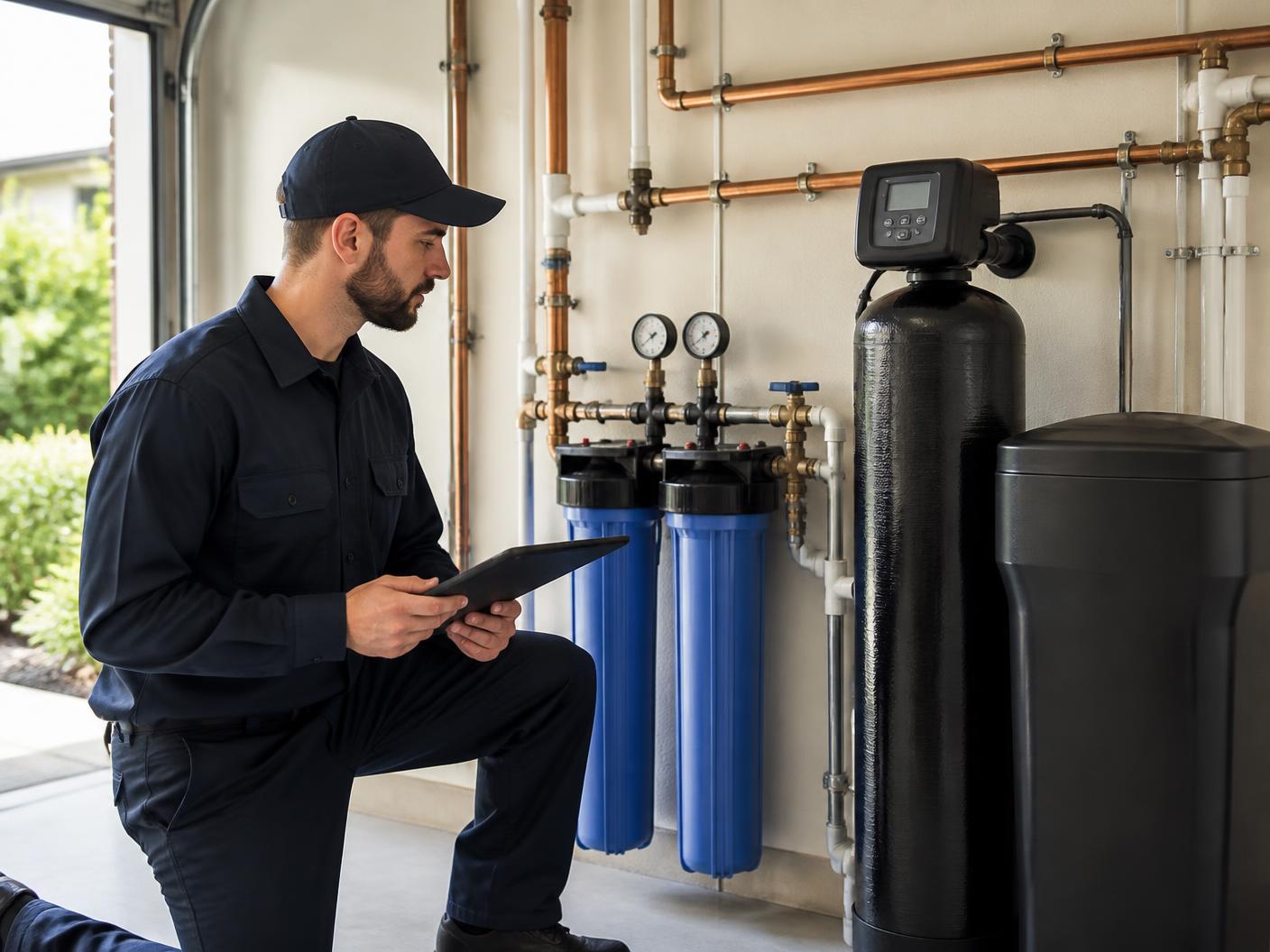
We do not disappear after installation. ADG Home Services supports the system through inspection, replacement schedules, documented maintenance and future performance reviews.
Fact-first recommendations
We start with published data and measured conditions, not a predetermined product.
Product-specific certification review
We check the exact model's certified claims before it is discussed as a solution.
Professional system design
Equipment is sized to household flow, water condition and the stated objective.
Clear written scopes
You see what will be installed, what it addresses and what it does not.
Property-respect standards
Protected work areas, tidy mechanical spaces and a clean finish.
Long-term maintenance support
Documented service intervals so performance does not quietly decline.
Same team, new name
Reviews earned before the name changed
Rated 5 out of 5 based on 53 reviews. Original 4- and 5-star reviews published for the same crews on the Puroserve, Pro Water Solutions and Supreme Filtration review pages — all now operating as Only Filtered.
Published as Supreme Filtration
Disclaimer: Only Filtered is the successor to Supreme Filtration. These reviews were originally published under the Supreme Filtration name and are shown here because the same team now serves customers as the team at Only Filtered. Business, team and staff references have been updated to the current name — company and team mentions read as “the team at Only Filtered” and individual staff names read as Adam Webb. View original Supreme Filtration reviews
The team at Only Filtered is amazing. They did an excellent job installing and fine tuning our water system. We now have water BETTER than anything bottled! I'm so glad I made the call and had the opportunity to work with this team!
Kristel K. · Yelp / Google
I waffled and stressed for months about whether to get water filtration in my house, spoke with a couple of companies, and I still wasn't sure, and when I called the team at Only Filtered I just felt more comfortable so I went ahead. They did AMAZING work for me. They informed me about everything in advance, were always reachable, answered all my questions, helped me get oriented on maintenance (which had been making me nervous), just all the things that had made me anxious or left me questioning were resolved. My water now is just AWESOME. It tastes amazing, my shower water is... beyond. And I'm pretty sure my appliances are all sighing with relief too. CA water is so hard and this is important stuff. Highly recommend.
Anu N. · Yelp / Google
We had a great experience with the team at Only Filtered — they came and installed our water filtration in one day and called the next day to follow up. They were super helpful, super kind, super clean and courteous. I would highly recommend.
Laura P. · Yelp / Google
Searched around for installers to add a water filtration system for the house. Came across Only Filtered and was reached out to by Adam Webb. They provided me with very good insight with their products and services. Adam Webb was also very responsive whenever I had questions about the system. Installation was done same day without any issues. This system is a game changer. Thanks to the team at Only Filtered.
Oliver D. · Yelp / Google
Didn't have to look around much for a good company to install a water softener. Got very detailed explanations from Adam Webb, and he was patient and thorough in answering my questions. I liked that they never tried to sell me on the most expensive option and were honest. Thank you for everything! We really love our new softener!
Gina B. · Yelp / Google
Can't say enough about Adam Webb and the team at Only Filtered. I researched and spoke with 4-5 other “5-star yelp” companies on getting a water softening system for our place. Adam Webb was very professional and patient with all my questions throughout the whole process. The price he gave was also VERY competitive, hence why I chose to go with them. Installation took 3-4 hours and everything is in place now. I would highly recommend going with Only Filtered. Adam Webb and the team were top-notch. Thank you!
D H. · Yelp / Google
Only Filtered is awesome. Excellent communication and pricing. Very happy with our new system.
Alex B. · Yelp / Google
We looked into multiple companies, but ultimately the team at Only Filtered was able to provide a better product at a very reasonable price. Quick and easy install. Highly recommend!
Spencer Y. · Yelp / Google
We had the unfortunate experience of a slab leak and decided to replumb our house. Given the opportunity, we decided also to add a filtered soft water system. The team at Only Filtered was excellent to work with and did a fantastic job with our installation. Adam Webb and the crew are very professional, patient, knowledgeable and extremely courteous. We love the new system and feel like it is a terrific upgrade for our home! Great job guys!
Michael D. · Yelp / Google
Adam Webb and the team at Only Filtered are great. Very informative, efficient and fair pricing. Great products and smooth install.
Brad B. · Yelp / Google
This is our first time owning a water filtration system and knew nothing about how to change water filters when they are due for replacement. Found Only Filtered on Yelp, and spoke with Adam Webb. He was so nice giving me instructions how to replace filters myself, and also helped to order the replacement. Since it is our first time owning the water filter system, I'd rather have the professional do the filter replacement so I could do it myself next time. Then, Adam Webb scheduled a technician to come do the job within just a couple of days and at very reasonable price. Thank you so much for your help.
Tiffany F. · Yelp / Google
I waited several months to write this review so that I could fully see how well the water system operated. First, Adam Webb is super responsive and was able to give me an explanation of the system he thought was best for our house as well as a quote quickly. The pricing was typical/slightly lower for similar systems. However, Adam Webb was so on top of it and thorough that we went with Only Filtered. Once the paperwork was signed, time was scheduled to install the system. He had to go through a wall, which seems normal, and did an extremely clean and quick job of connecting the water. He was also very professional. I had one issue that I noticed a few days later — the water flow was very audible whenever we flushed or opened a tap. Adam Webb immediately knew that it was probably the pressure regulator, a common potential issue they see with old regulators when installing, but he did not want to upsell us during installation without actually knowing it would be an issue. I really appreciated that, and we had it replaced because I trusted them (pricing was fair). Several months later, I don't understand how we ever lived without this system! Our appliances have no build up, there are no white streaks after cleaning, and our hair/skin is less dry. I talked to several water softener installation companies, got quotes, etc. — I felt confident that this one was the best for our needs, and it took less than a week between talking to Adam Webb and installation. If you're in the market for water filtration, I would jump on calling the team at Only Filtered before they get too popular!
Sage R. · Yelp / Google
Only Filtered installed their water softener and catalytic carbon filtration system for us. Adam Webb was great at explaining the entire process and did a great job installing the system.
Yelena K. · Yelp / Google
The team at Only Filtered were extremely knowledgeable and professional about water filtration. I wanted a soft water system and triple RO drinking water for the house. They came and installed within 2 days after the consultation. Adam Webb the installer was friendly and installed everything very quickly. All good people there and priced fairly.
Steve Y. · Yelp / Google
Adam Webb provided such excellent service for my home that we had him install a water purification system for our surgery center. Great service, great communication, great product.
Simon M. · Yelp / Google
Great service and support. On time, friendly, and professional. Decent pricing and delivered as promised. Followed Covid mask protocol without being told or reminded.
Brian S. · Yelp / Google
I started researching water systems for my home so I called up the team at Only Filtered. Adam Webb came over the next day, looked at the installation location, and made a recommendation for a new salt free water conditioner. They came out in a couple of days and installed the unit. The communication was excellent throughout the whole process and overall I had a great experience. I highly recommend this business!
Daniel G. · Yelp / Google
The team at Only Filtered were a joy to work with. During their free estimate visit, they were able to answer all my questions and guide me through the selection process. Very reasonably priced and high quality service. Installation was fast and painless, and the system has been working great ever since. I can't recommend these guys highly enough.
Josh R. · Yelp / Google
Published as Puroserve
Disclaimer: Only Filtered is the successor to Puroserve. These reviews were originally published under the Puroserve name and are shown here because the same team now serves customers as the team at Only Filtered. Business, team and staff references have been updated to the current name. View original Puroserve reviews
Adam Webb was amazing from start to finish! Explained what we'd be getting clearly and made sure we had the size system we need (there are six people living here, so a lot of water usage.) The price from the team at Only Filtered vs. the other two companies was much better. Adam Webb also checked back with us twice after installation and after about a month of service to make sure we were happy with their service. First class experience all around!
Verified customer · Yelp / Google / Facebook / Houzz
They are like family! They don't try to oversell you, only what they feel you need. The team at Only Filtered are such nice people too. I've been a customer since the 70's for their water softener service. And because I have been with them that long, they even adjusted the monthly fee for me, and when they told me that, I got so emotional with gratitude. How often does anyone go out of their way to make a customer happy? Who does that anymore? They are the best!! Don't hesitate to hire them, and use their products — good, honest, hard working company.
Verified customer · Yelp / Google / Facebook / Houzz
Just had to write a quick review! Adam Webb was so accommodating and a great communicator to assure we have the best water purification system available. We have used their services for over twenty years and here's to the next TWENTY.
Verified customer · Yelp / Google / Facebook / Houzz
We just bought new construction in Santa Clarita. Adam Webb is my area representative and he hooked us up with the first 30 day trial for free. He was super nice, and went the extra mile to earn my business. Also, he really took the time to explain everything. We are very happy with the awesome water quality we get. When I was a kid we had to use the old school salt bags and fill it up, but now you get nice soft water with no mess or fuss and it preserves the life of all my appliances!
Verified customer · Yelp / Google / Facebook / Houzz
I can't say enough about this company — amazing! They really took care of my needs, they came out and dug the trench and made sure I was happy with everything that I asked for. Really good people. That's how companies should be, making sure that their customers are taken care of. Thank you so much.
Verified customer · Yelp / Google / Facebook / Houzz
Adam Webb was super helpful in choosing our water softener company. It has definitely made a difference in our water, and he made the process very seamless. We shopped around to many companies and are glad we went with the team at Only Filtered.
Verified customer · Yelp / Google / Facebook / Houzz
We just recently switched over and are very pleased with the results so far. Adam Webb was very helpful in getting us set up and made the transition easy. The team at Only Filtered was great and fast. Great and friendly!
Verified customer · Yelp / Google / Facebook / Houzz
Great service and very pleased with the results so far. Adam Webb helped us get set up and create our new account, and the team at Only Filtered came out to install the unit. Both were helpful and quick, and we are really loving our soft water!
Verified customer · Yelp / Google / Facebook / Houzz
Everything thus far is great. The quality is much better than my last service. Their customer service is very responsive and helpful. I recommend this company.
Verified customer · Yelp / Google / Facebook / Houzz
Adam Webb is very courteous and professional.
Verified customer · Yelp / Google / Facebook / Houzz
Published as Pro Water Solutions
Disclaimer: Only Filtered is the successor to Pro Water Solutions. These reviews were originally published under the Pro Water Solutions name and are shown here because the same team now serves customers as the team at Only Filtered. Business, team and staff references have been updated to the current name. View original Pro Water Solutions reviews
We notice a difference in our drinking water, our laundry…and even on our skin and hair when we travel…nothing is as good as home!
Sharon C. · prowatersolutions.com
There is a lot to be said for working with a company that cares about its customers and its reputation.
Kalpana D. · prowatersolutions.com
My family couldn't be happier. I recommended them if this is something your house and family need.
Johnathan L. · prowatersolutions.com
They are professional and knowledgeable. I would definitely recommend them to others.
Ali Y. · prowatersolutions.com
The team at Only Filtered is an honest company who provides a high-quality product and we highly recommend them.
CJ D. · prowatersolutions.com
Adam Webb and the team at Only Filtered are both very professional and friendly. The water in the house is great now!
Dennis D. · prowatersolutions.com
Reviews reproduced as originally published on the teams' prior review pages at supremefiltration.com, puroserve.com and prowatersolutions.com. Some reviewer names were not published with the originals. Individual results depend on the home, the water and the equipment selected.
Book the free tap testComplete water care
Equipment does not stay effective on its own
Media, cartridges and membranes have finite service lives. Documented intervals are what keep a system performing the way it was specified.
- Filters have capacity limits.
- Carbon media must be replaced or serviced.
- RO prefilters and membranes require scheduled maintenance.
- Softener salt and operating condition must be monitored.
- Neglected equipment may lose performance.
- Replacement schedules vary by system, water condition and consumption.
ADG Essential Water Care
An annual check that keeps the basics documented.
- Annual inspection
- Basic performance review
- Equipment-condition report
- Maintenance reminders
$189 – $249 per year
ADG Complete Water Care
Scheduled service for homes relying on active treatment equipment.
- Scheduled filter service
- System sanitization where applicable
- Pressure and leak review
- RO performance check
- Priority scheduling
$389 – $649 per year
ADG Concierge Water Care
Coordinated care across whole-home and drinking-water systems.
- Coordinated whole-home and drinking-water system maintenance
- Priority service
- Annual water-profile review
- Documented service history
- Preferred replacement pricing
$749 – $1,200 per year
Where we work
South Orange County communities we serve
Every neighborhood has its own plumbing reality. These notes reflect what we actually encounter.

Ladera Ranch
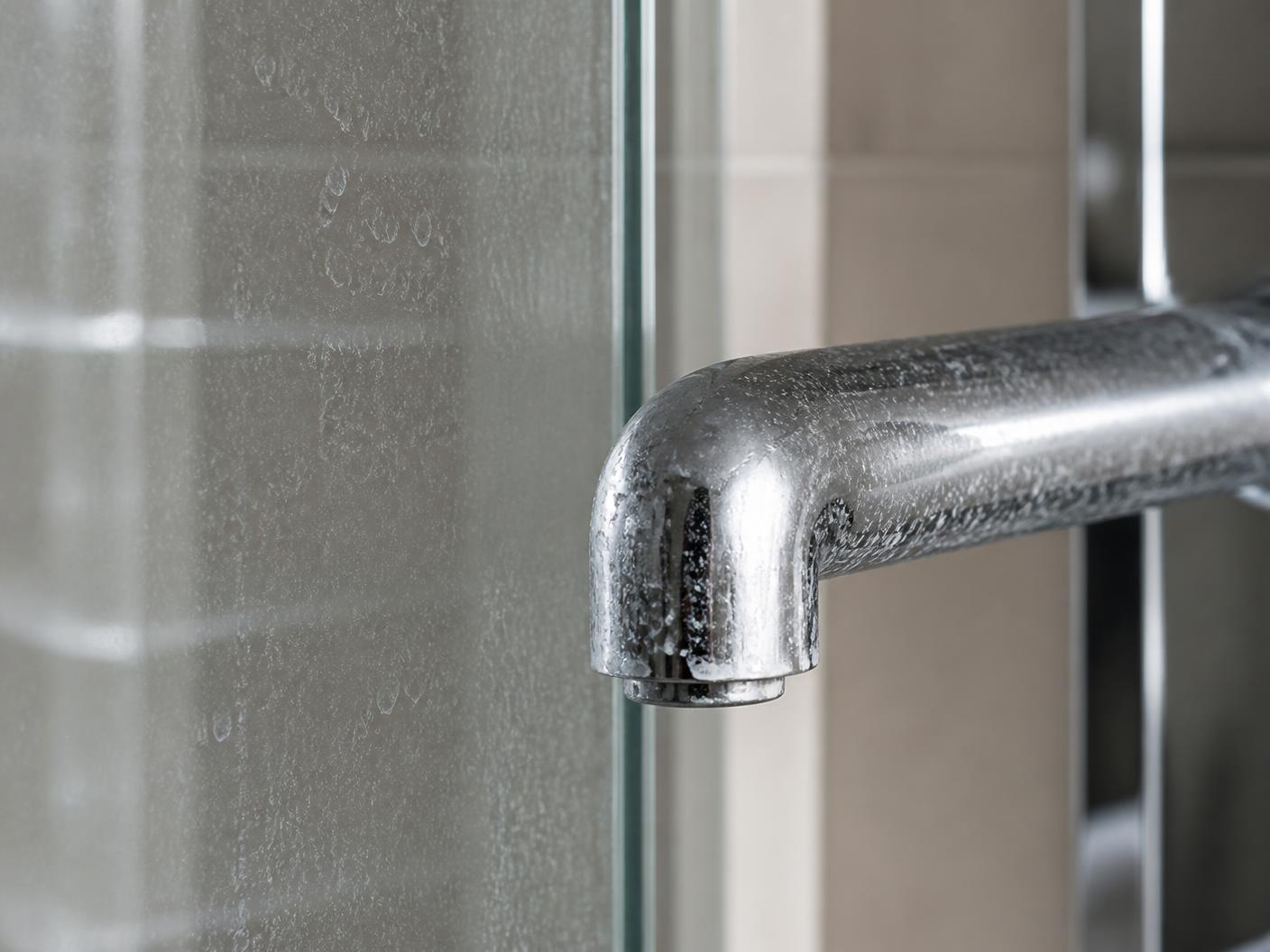
Master-planned neighborhoods on Santa Margarita Water District service, where imported treated surface water arrives hard enough to leave visible spotting on glass and shower enclosures. Homes here often pair a hardness strategy with a dedicated drinking-water fixture.
Rancho Mission Viejo
Newer construction with modern manifold plumbing and mechanical closets that usually make a clean whole-home installation straightforward. Many owners here start with an equipment review before adding anything.
Las Flores
Compact lots and shared walls mean placement and drain access drive much of the design conversation. Point-of-use drinking water is a common first step.
Coto de Caza
Larger estates with high simultaneous demand, where sizing for flow matters as much as media selection. Multi-zone irrigation and equipment rooms are typical considerations.
Mission Viejo
Established homes where original galvanized or aging copper runs can influence taste and fixture condition independent of the delivered supply. Inspections often start at the water heater.
Rancho Santa Margarita
Hillside communities with variable static pressure, which affects both softener sizing and reverse-osmosis production rates. Pressure review is part of the assessment.
San Juan Capistrano
A mix of historic and newer homes, with some properties on different supply arrangements than surrounding tracts. We confirm the serving utility before discussing data.
Also serving
- Laguna Niguel — Hillside tracts with mature plumbing and frequent appliance-protection questions.
- Laguna Hills — Established neighborhoods where fixture scale is often the first noticed symptom.
- Aliso Viejo — Dense planned communities where equipment placement and drain routing shape the design.
- Lake Forest — Wide construction-era range, so equipment inspections vary considerably home to home.
- Irvine — Different serving utility than Ladera Ranch, so local data is confirmed before any recommendation.
- Dana Point — Coastal exposure adds fixture and appliance longevity to the conversation.
- San Clemente — Varied supply arrangements and older coastal housing stock.
- Trabuco Canyon — Semi-rural properties where some homes have private-source considerations.
- Foothill Ranch — Consistent tract construction that makes whole-home installations predictable.
- Talega — Newer master-planned homes with modern equipment closets and pre-plumb loops.
Evidence and transparency
Read the primary sources yourself
Each summary below is neutral and date stamped. We would rather you verify than trust us.
County of Orange, Fifth District
District update concerning reported pediatric cancer cases
The Fifth District has published updates on reported Ewing sarcoma diagnoses identified by Ladera Ranch families and on requests for an expedited review. The updates state that the cause of the reported cases is not known.
Published: 2026 · Reviewed: July 31, 2026
Open the source (opens in a new tab)LARMAC
Landscape pest-management program update
LARMAC announced a temporary 60-day pause on certain routine landscape products while it reviews its program. The announcement does not conclude that those products caused any illness.
Published: 2026 · Reviewed: July 31, 2026
Open the source (opens in a new tab)Santa Margarita Water District
2026 Water Quality Report (covering 2025 testing)
The district's current report describes monitoring results for the water delivered to its service area, including Ladera Ranch. It states that delivered drinking water met or surpassed applicable federal and state standards.
Published: 2026 · Reviewed: July 31, 2026
Open the source (opens in a new tab)Santa Margarita Water District
PFAS information for customers
The district publishes information about PFAS monitoring and regulatory developments affecting its supplies. Homeowners can review it to understand what has and has not been reported locally.
Published: 2026 · Reviewed: July 31, 2026
Open the source (opens in a new tab)California State Water Resources Control Board
PFAS information and regulatory activity
The State Water Board maintains statewide guidance, notification levels and monitoring orders for PFAS compounds. It is the authoritative California reference for current PFAS requirements.
Published: Updated periodically · Reviewed: July 31, 2026
Open the source (opens in a new tab)U.S. Environmental Protection Agency
Reducing PFAS in drinking water with home filtration
EPA explains how home treatment options may reduce certain PFAS compounds and why certification and maintenance matter. It emphasizes verifying a product's specific reduction claim.
Published: Updated periodically · Reviewed: July 31, 2026
Open the source (opens in a new tab)NSF
Water treatment device certification information
NSF publishes the standards used to certify residential water treatment products and a searchable listing of certified models. Each listing states the specific claims a product has been certified for.
Published: Updated periodically · Reviewed: July 31, 2026
Open the source (opens in a new tab)Straight answers
Questions we get asked in Ladera Ranch
Including the ones where the honest answer is no.
No-pressure assessment
Request your water assessment
Pick the service you want from the pricing board above, then six short steps. We review your concerns, your equipment and the published local data before anything is recommended.
Choose an option to carry its price range into your request, or leave this as-is and we will advise after the assessment.
- Your concerns
- Your home
- Current equipment
- Your goals
- Contact details
- Date & time
Next step
Start with answers, not equipment
A no-pressure assessment: your concerns, your existing equipment, the published local data and a plain-language recommendation — including the recommendation to do nothing.